
History
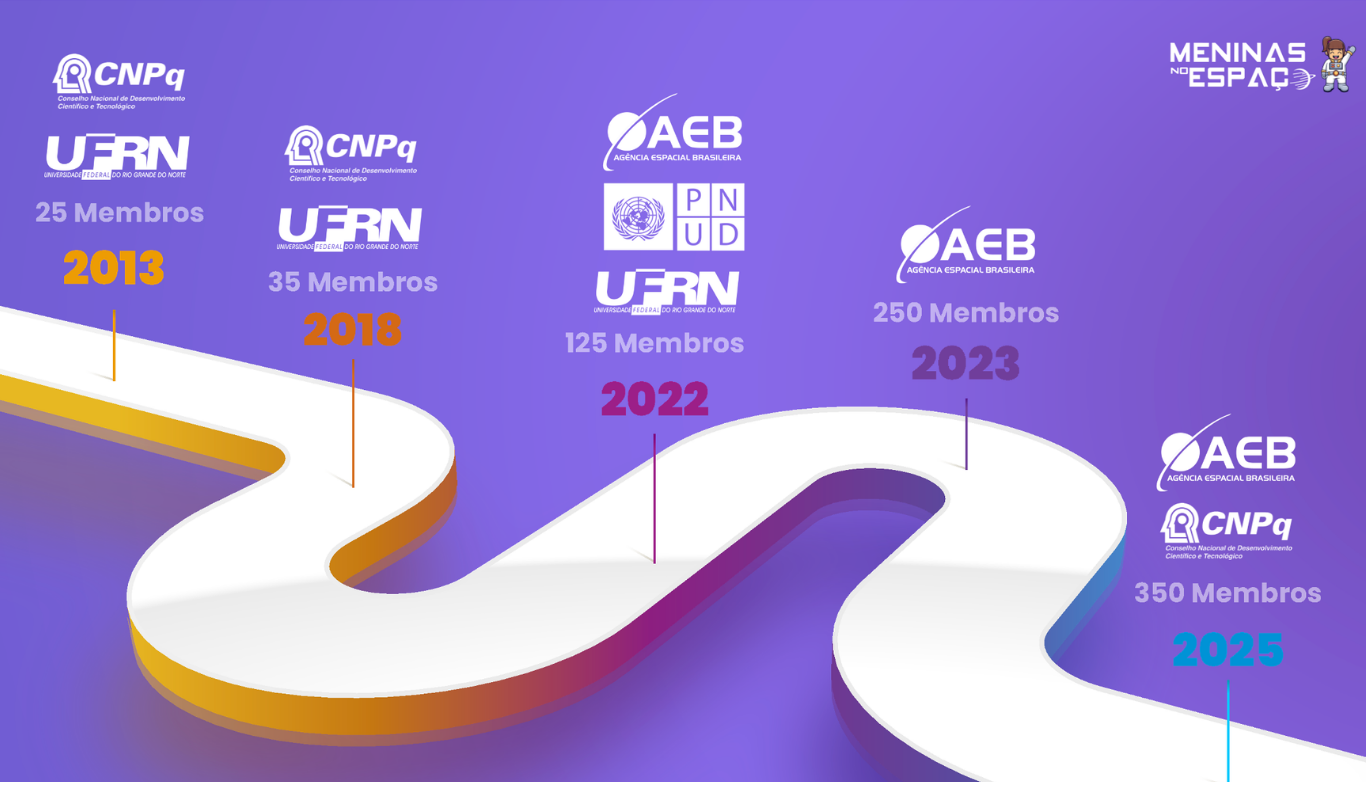
The history of the project’s evolution began in 2013, when everything started with a dream and the belief that education is an action capable of transforming dreams into reality. The Girls in Space project began in 2013 with the conviction that education can transform lives, especially for girls and women.
Ensure inclusive, equitable, and quality education, and promote lifelong learning opportunities for all
- PHASE 1 – ORIGIN (2013–2014)
- PHASE 2 – EXPANSION (2018–2019)
- PHASE 3 – CONSOLIDATION (2022–2023)
- PHASE 4 – SCALING (2023–2024)
- PHASE 5 – SYSTEMIC EXPANSION (2025)
The Girls in Space Educational Program originated in 2013, grounded in the belief that education is a structural tool for social transformation. Initially conceived as a pilot initiative, its main objective was to encourage the interest and retention of girls and women in the fields of Science, Technology, Engineering, Arts, and Mathematics (STEAM), with special emphasis on aerospace topics.
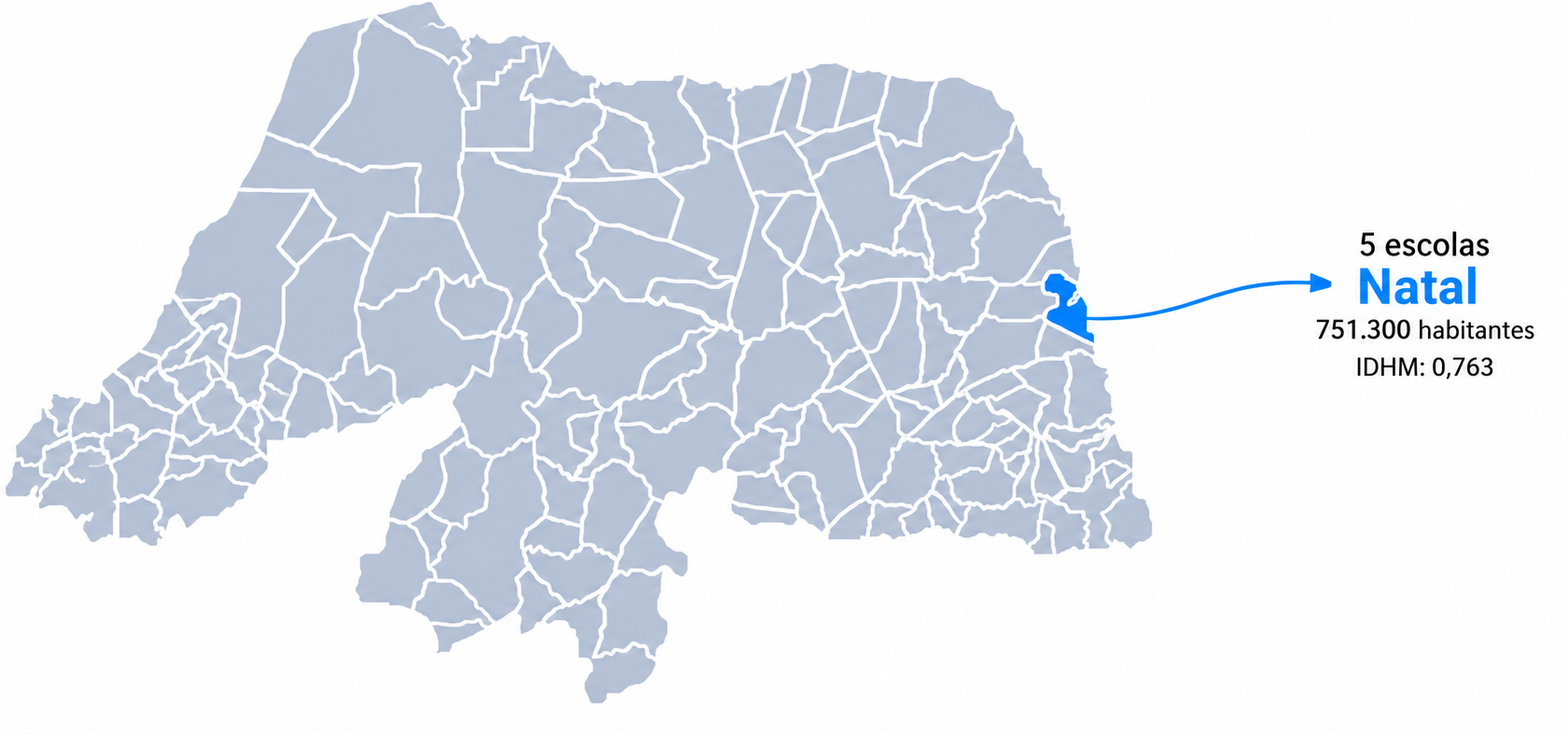
The program’s first milestone occurred through the submission of a proposal to a public call issued by the National Council for Scientific and Technological Development (CNPq), focused on investigating the barriers faced by women in choosing engineering degree programs. The initiative involved five public schools in the city of Natal, Rio Grande do Norte, and included the participation of undergraduate students. As a result, two master’s dissertations were developed, analyzing the factors influencing female students’ decisions to pursue engineering programs at the Federal University of Rio Grande do Norte (UFRN), highlighting the importance of educational guidance and social representations of gender in science.
The map below presents the first record of the project operating exclusively in the capital city of Rio Grande do Norte, involving only five schools.
2013-2014
2018–2019
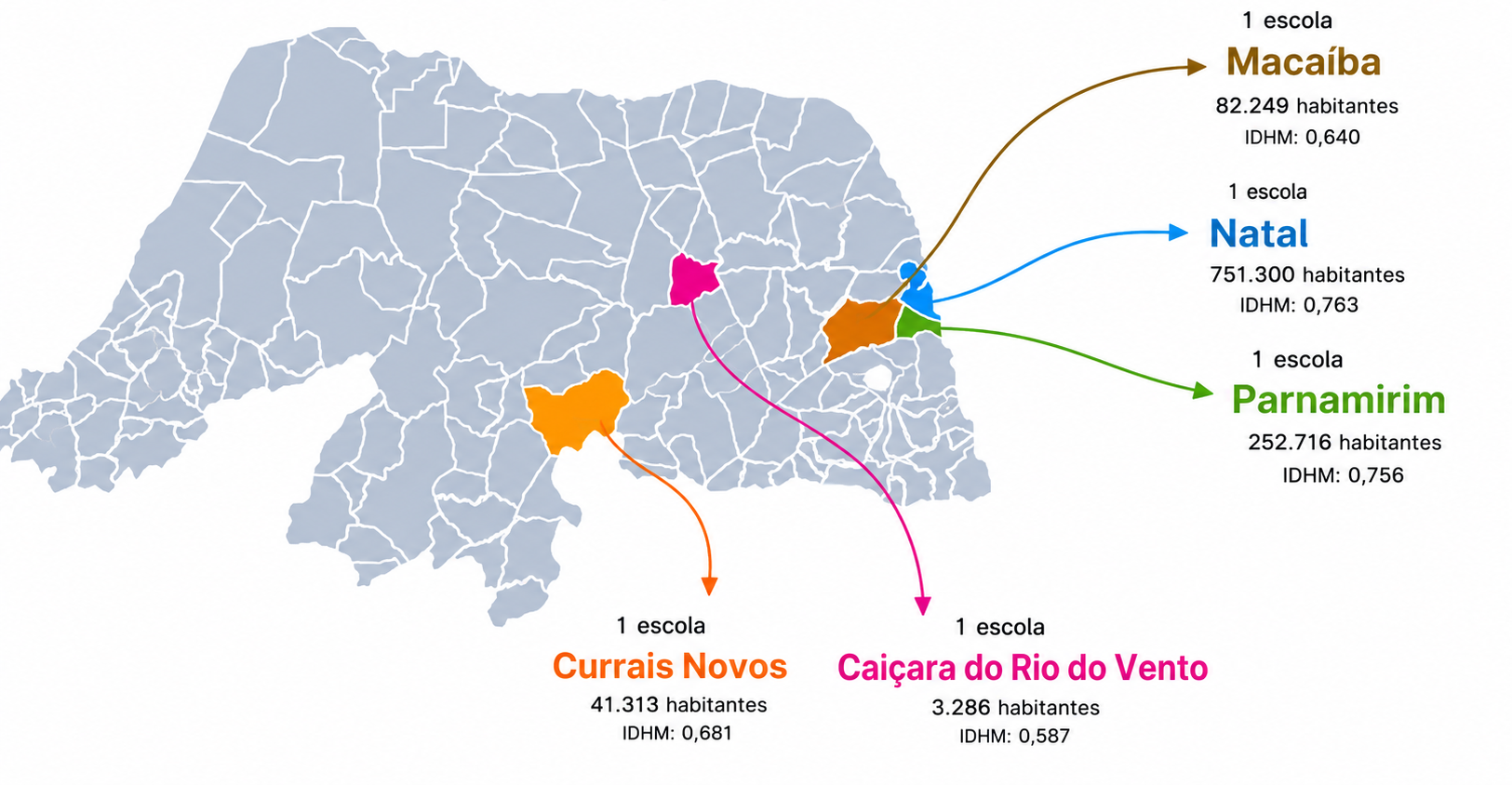
During the following two-year period, the program expanded and received funding through the “Girls in Science” public call, also supported by CNPq. This phase involved five municipalities, with teams composed of 25 students and five scholarship-supported teachers. The methodological approach began to incorporate the space sector as a central educational axis, stimulating participants’ interest in topics related to space exploration, emerging technologies, and sustainability. This stage was partly influenced by the engagement of undergraduate students and visits to scientific facilities, such as the Mars habitat, which supported the development of new educational methodologies.
2022-2023
Between 2022 and 2023, the program reached a significant milestone in institutional expansion through collaboration with the Brazilian Space Agency (AEB) and the United Nations Development Programme (UNDP). The number of students served tripled, increasing from 25 to 75 participants, while the network of schools expanded from five to 21 institutions across different regions of the state. During this period, a multilevel training model was established, in which teachers and tutors acted as multipliers, consolidating an educational ecosystem based on citizen science, active methodologies, and integration with space technologies.
Nine educational products were developed and delivered to AEB, including courses aimed at undergraduate, graduate, and basic education levels, establishing the program as an innovative experience in integrated science education.
2023-2024
The year 2023 was marked by actions focused on institutional strengthening and scientific dissemination. With support from the GLOBE Brasil Program, the initiative grew to include 100 scholarship recipients and reached 34 public state schools. A major highlight was participation in the International Virtual Science Symposium (IVSS), promoted by NASA, with the submission of 20 scientific papers produced by the students. At the same time, two editions of training workshops were held for teacher development, in addition to the 1st GLOBE Brasil Symposium, which promoted the sharing of achieved results. During this same period, two scientific environmental observation competitions were organized using the GLOBE Observer application, aiming to encourage citizen science and participatory environmental monitoring.
2025
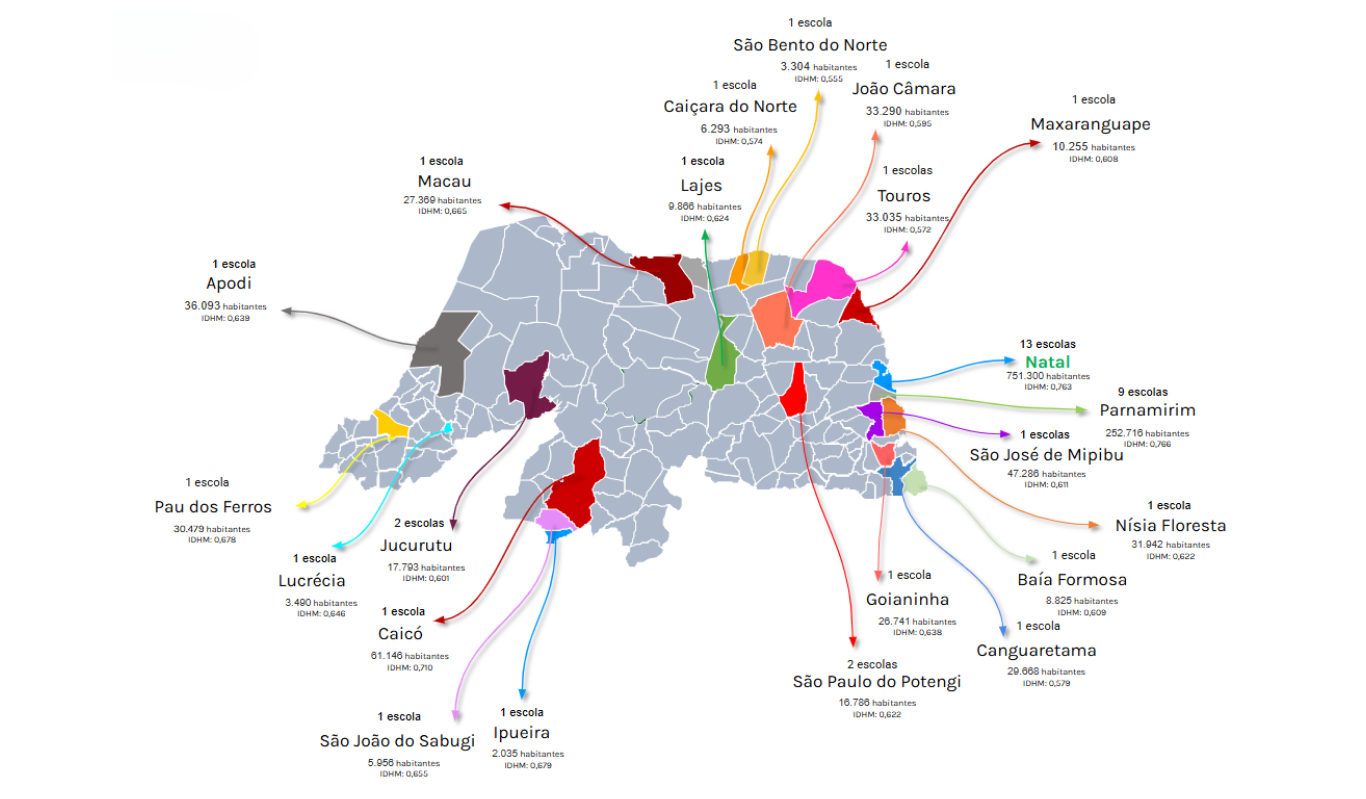
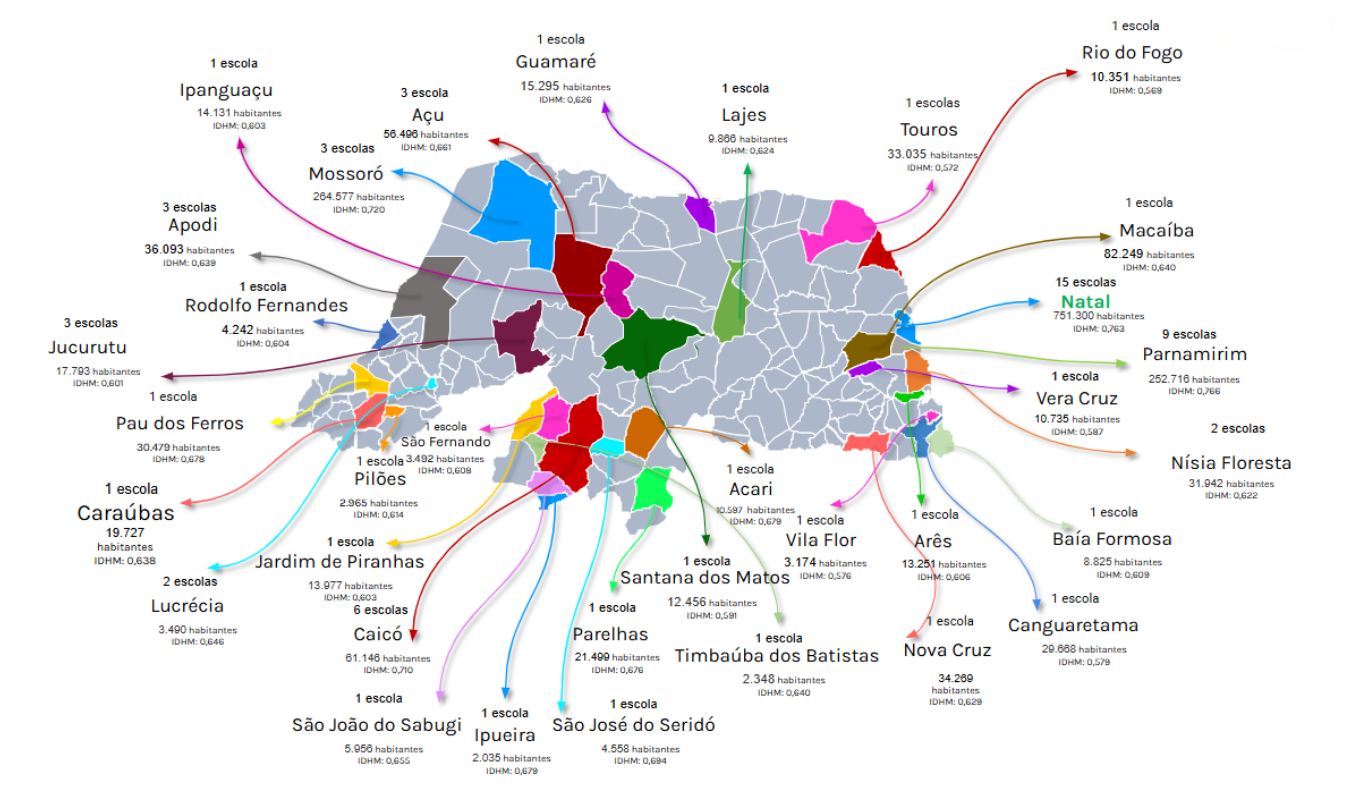
In 2025, the program reached its greatest territorial and institutional scope. Through a specific public call, 77 schools distributed across 53 municipalities in the state of Rio Grande do Norte were selected. Among the most relevant milestones was the organization of the National Science Fair of the GLOBE Brasil Program, hosted by the Girls in Space team, consolidating its position as a national reference in science education with a gender perspective. The current proposal seeks to expand the initiative’s outreach by structuring a methodological model that can be replicated in other Brazilian states, promoting equity, innovation, and the strengthening of the space and environmental sectors within Brazilian basic education.
At its current stage, Girls in Space reaches its most robust phase of consolidation, integrating science education, space technologies, sustainability, citizen science, and student leadership into an expanded collaborative network. The program now operates with greater territorial and institutional density, bringing together public schools, universities, funding agencies, international organizations, and educational networks around an integrated proposal for science education. This configuration is reflected in the expansion of the program’s territorial presence, the strengthening of actions developed in 2024 and 2025, the organization of the National Science Fair of the GLOBE Brasil Program and the Olympiad, which mobilized participants from different Brazilian states, and the international visibility achieved through activities and presentations conducted in 2026. Distribution of Registered Schools in the State of Rio Grande do Norte in 2025.
The theme of sustainable development, with a focus on the Sustainable Development Goals (SDGs), from the creation of the term and its concept to the establishment of the 2030 Agenda, is essential for understanding a topic that has been discussed since the 1980s. This discussion is grounded in authors who approach sustainability not only as an environmental issue, but also as a social and economic one.