
Sustainable Development Goals (SDGs)
The Girls in Space Program is aligned with the United Nations 2030 Agenda, contributing in an integrated way to the promotion of education, gender equity, environmental sustainability, and the strengthening of cooperation networks.
The program’s work goes beyond scientific training: it promotes social transformation, skills development, and engagement with global challenges through citizen science, active methodologies, and integration with real environmental data.
Project Contributions to the SDGs
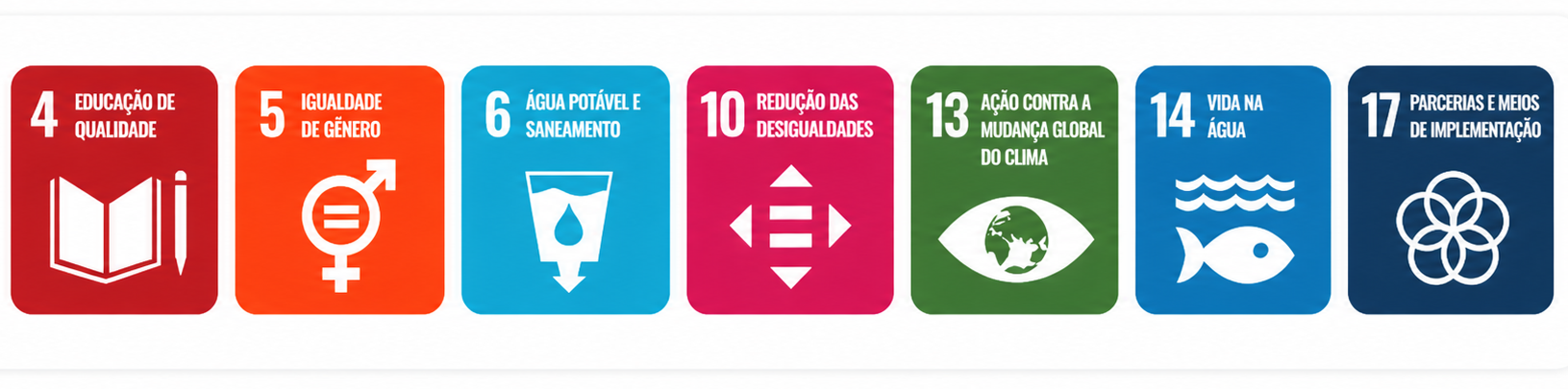
SDG 4 – Quality Education
The project promotes accessible and meaningful science education, especially in public schools, using active methodologies, project-based learning, and international scientific protocols. Participants are no longer just students; they become producers of knowledge.
SDG 5 – Gender Equality
Girls in Space directly addresses gender inequality in STEAM fields by expanding access, retention, and leadership opportunities for girls and young women in science and technology.
SDG 6 – Clean Water and Sanitation
Through hydrosphere and ocean literacy protocols, the program develops investigations on water resources, water quality, rivers, estuaries, and oceans, connecting students to the environmental realities of their territories.
SDG 10 – Reduced Inequalities
By prioritizing public school students and socially diverse contexts, the project expands educational and scientific opportunities, reducing inequalities in access to knowledge and innovation.
SDG 13 – Climate Action
Through citizen science and the use of environmental data, participants investigate climate phenomena and develop critical awareness regarding climate change and sustainability.
SDG 14 – Life Below Water
Actions related to oceanography, marine ecosystems, and environmental conservation promote understanding of the importance of oceans and aquatic biodiversity.
SDG 17 – Partnerships for the Goals
The program is structured as a collaborative ecosystem, integrating public schools, universities, government institutions, and international organizations, strengthening cooperation networks and expanding the impact of its actions.
Science, Territory, and Social Transformation
By connecting education, science, and sustainability, the Girls in Space contributes to the development of a generation of girls capable of understanding, investigating, and transforming the reality in which they live.
Its work demonstrates that science, when accessible and connected to local realities, becomes a powerful tool for sustainable development and for building a more just and inclusive future.