
Project
The Girls in Space Program is a Brazilian educational initiative that promotes inclusion, scientific education, and the leadership of girls and young women in the fields of Science, Technology, Engineering, Arts, and Mathematics (STEAM), with an emphasis on the aerospace sector.
Originating in Rio Grande do Norte and nationally coordinated from Brasília, Federal District, in partnership with strategic institutions such as the Brazilian Space Agency (AEB), the program has established itself as an initiative that begins locally and expands nationwide, connecting different regions and educational realities across Brazil.
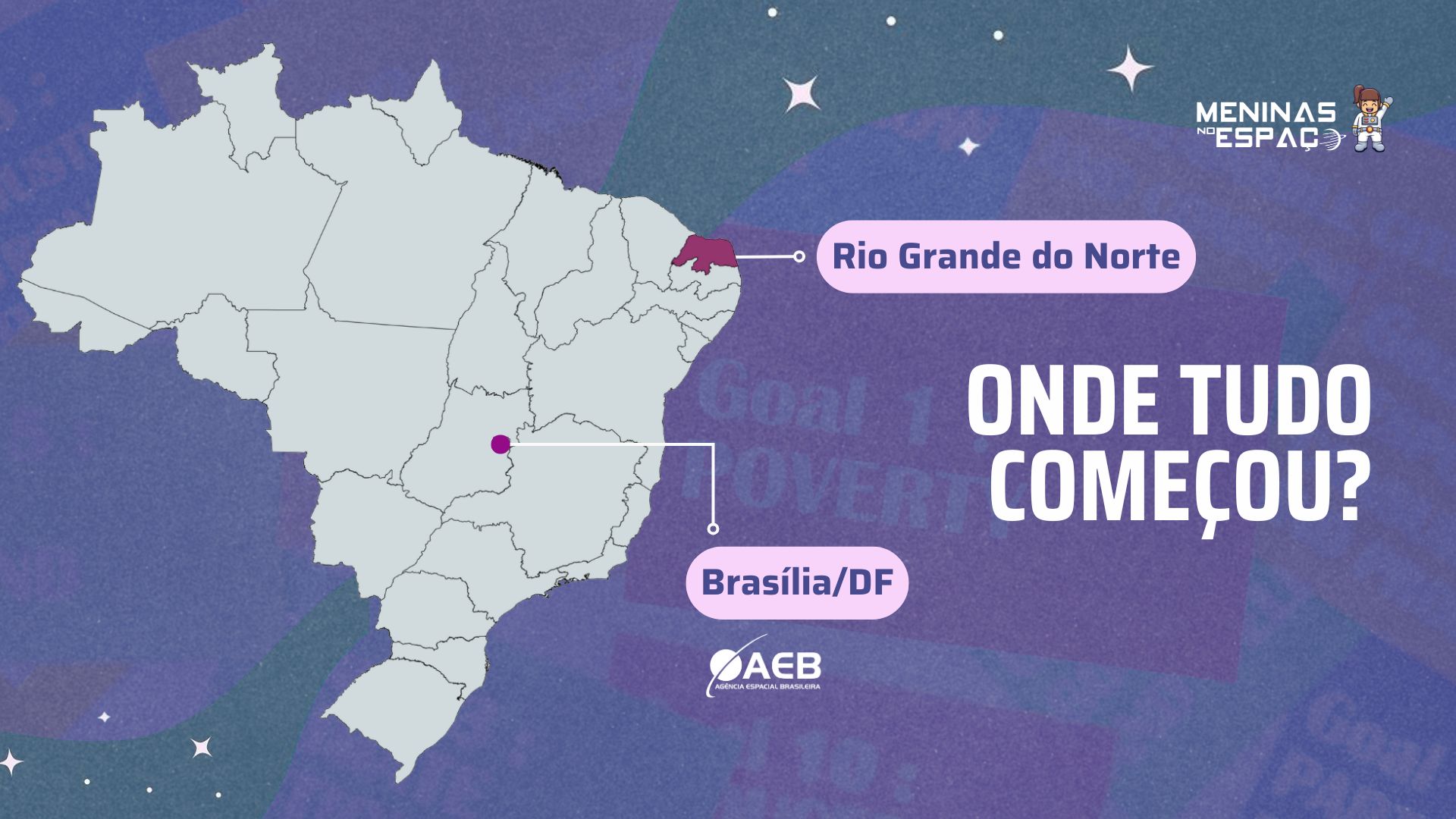
More than expanding access to scientific knowledge, the project seeks to develop critical, investigative, and transformative education, enabling students to act as researchers, leaders, and agents of impact within their communities.
The trajectory of the program demonstrates continuous and structured growth. What initially began working with only a few schools expanded to dozens of municipalities and partner institutions, reaching different territories and educational contexts throughout the state of Rio Grande do Norte.
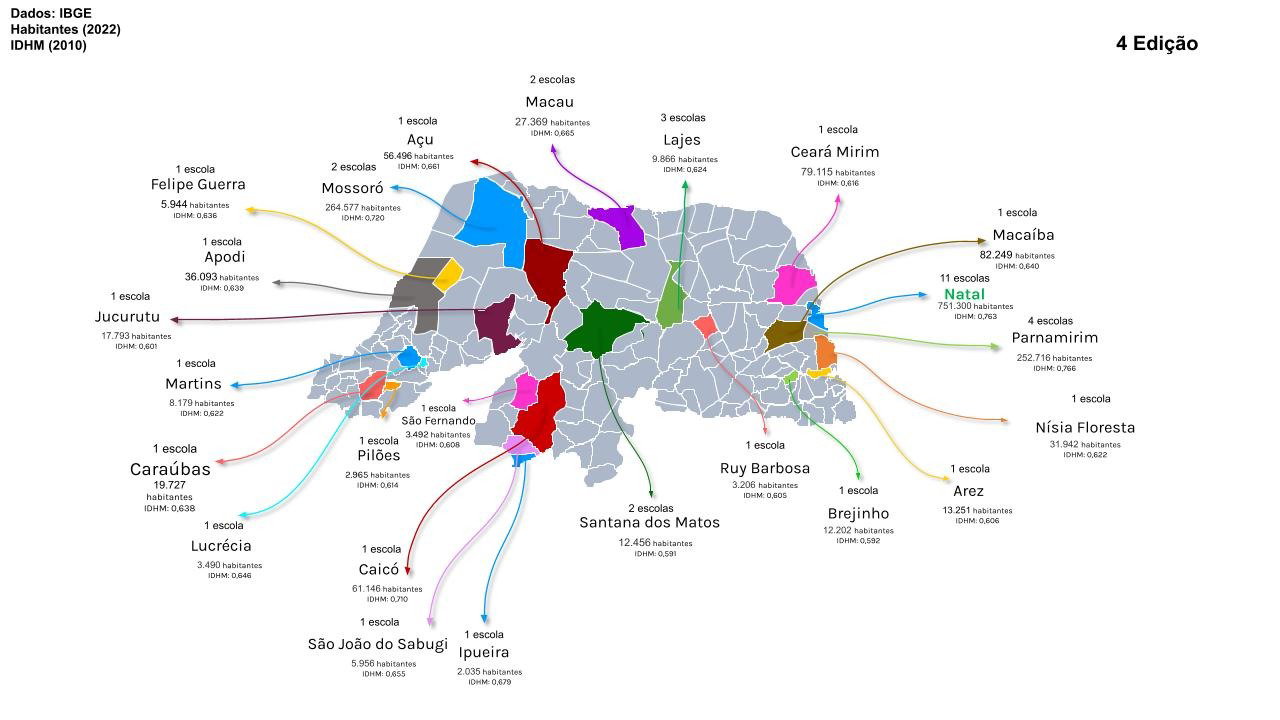
Currently, the program develops activities in multiple cities, involving public schools, teachers, researchers, undergraduate students, graduate students, and basic education students, forming a collaborative network of learning and innovation. Data presented by the project indicate activities carried out in dozens of schools and municipalities, strengthening the territorial reach and social impact of the initiative.
The methodology of Girls in Space is based on:
- active methodologies
- inquiry-based learning
- international scientific protocols
- ocean and environmental literacy
- project development
- citizen science
- production of educational materials and products
Participants carry out practical activities related to the atmosphere, hydrosphere, climate change, environmental monitoring, and sustainability, connecting local problems to global challenges.
The program operates through active methodologies, inquiry-based learning, development of scientific projects, application of international protocols from the GLOBE Program, and practical activities related to the atmosphere, hydrosphere, biosphere, pedosphere, and the Earth system. Participants conduct environmental observations, climate monitoring, data collection and analysis, portfolio production, and the development of solutions aimed at territorial challenges, connecting local issues to global discussions on sustainability, climate change, and environmental preservation.
Throughout its editions, the project has consolidated a significant territorial expansion within the state of Rio Grande do Norte, reaching municipalities with diverse social, economic, and educational contexts. Activities carried out in cities such as Natal, Parnamirim, Ceará-Mirim, Macaíba, Açu, Macau, Apodi, Santana do Matos, Pau dos Ferros, and Currais Novos, among others, demonstrate the program’s commitment to the decentralization of science education and to expanding access for public school girls to scientific and technological education. This territorial expansion highlights the project’s ability to adapt to different local realities, promoting inclusion and strengthening communities through education.
The results achieved between 2024 and 2025 reinforce the educational and social impact of the initiative. In 2024, the program impacted more than 10,915 people, carried out 403 activities, and applied five GLOBE scientific protocols involving areas such as the atmosphere, hydrosphere, biosphere, pedosphere, and Earth as a system. In 2025, even while continuing its implementation process, the project reached more than 6,328 people and conducted 183 activities, maintaining the application of scientific protocols and strengthening citizen science practices within public schools. The data also demonstrate the participation of dozens of schools, multiple active methodologies, and the training of students from different age groups, in addition to the involvement of undergraduate students, master’s students, doctoral students, and tutors in the educational process.
In addition to scientific activities, the program develops educational games, workshops, teaching materials, school portfolios, science olympiads, and interdisciplinary projects that stimulate critical thinking, creativity, and female leadership. The scientific initiation activities carried out by the students involve themes such as climate change, atmospheric monitoring, biodiversity, urban sustainability, environmental quality, and carbon sequestration, strengthening the connection between science, education, and socio-environmental responsibility.
Its operational structure follows collaborative principles inspired by the Triple Helix model, promoting integration among universities, government, schools, and society to ensure innovation, sustainability, and long-term impact. In this way, Girls in Space transforms science into a tool for inclusion, human development, and territorial transformation, preparing girls and young women to act as researchers, leaders, and agents of change within their communities.